
As temperatures begin to drop across South Jersey, homeowners start turning on their furnaces for the first time of the heating season. That’s also when we begin receiving calls from homeowners asking questions like, “Why won’t my furnace light?” or “Does my furnace have a pilot light or an electronic igniter?”
At Cool Temp Heating & Air Conditioning, we diagnose and repair gas furnaces throughout Pleasantville, Egg Harbor Township, Galloway, Northfield, Linwood, Somers Point, Brigantine, Margate, Ventnor, Longport, Ocean City, Mays Landing, and surrounding South Jersey communities.
Older and newer gas furnaces can ignite their burners in very different ways. Some older furnaces use a standing pilot light, while most modern furnaces use an electronic ignition system.
Understanding the difference can help you recognize what may be happening when your furnace won’t start, the burners won’t light, or your home suddenly has no heat.
Pilot Light vs. Electronic Igniter: What’s the Difference?
Both systems serve the same basic purpose: igniting the gas burners inside your furnace so the system can produce heat.
The major difference is how they accomplish it.
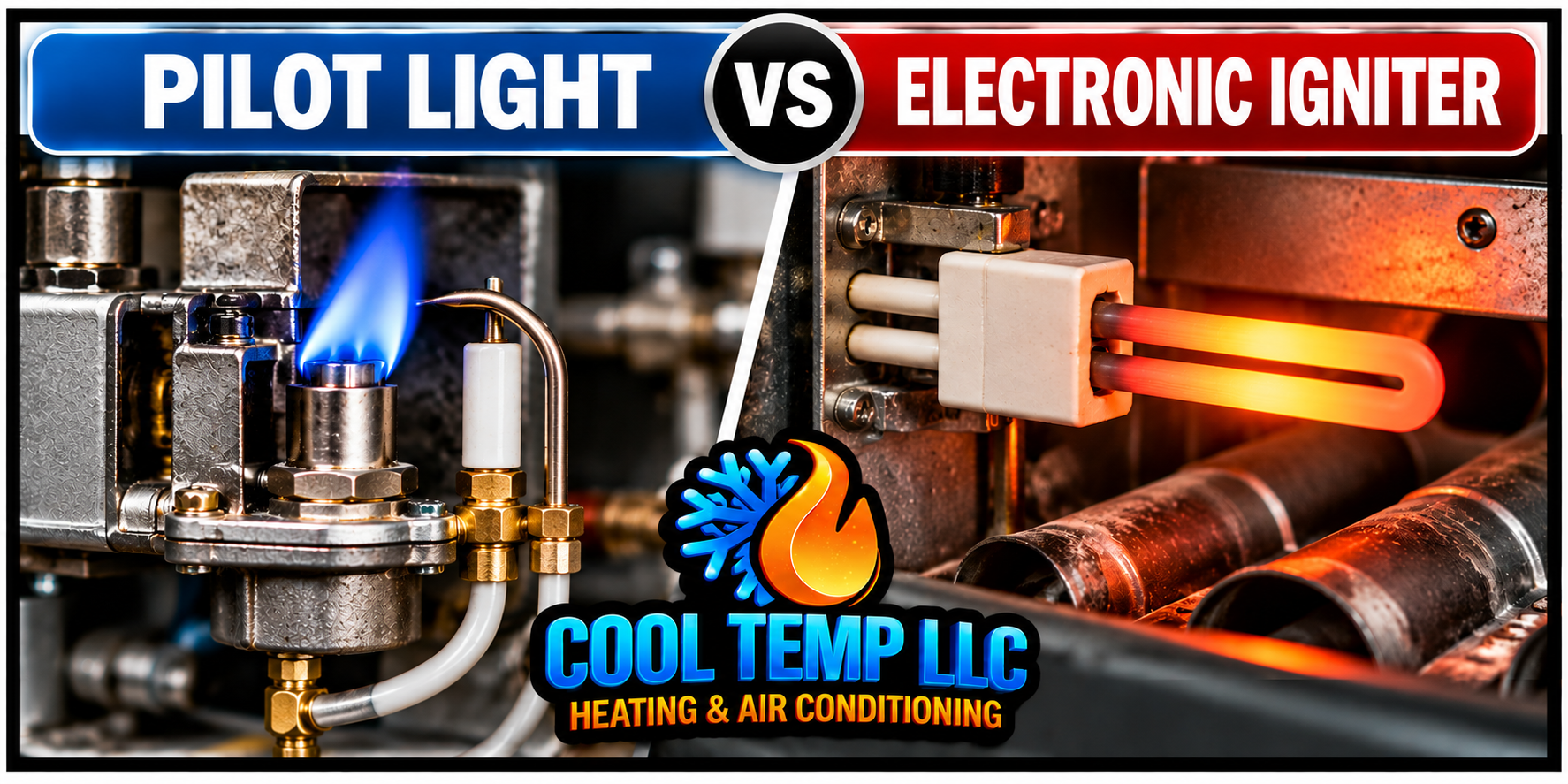
A traditional standing pilot uses a small flame that remains burning continuously. When the thermostat calls for heat, that flame helps ignite the main burners.
Most modern furnaces use electronic ignition instead. The ignition system activates only when the furnace receives a call for heat.
If you have a newer gas furnace, there’s a good chance you have an electronic ignition system rather than a traditional standing pilot light.
1. What Is a Furnace Pilot Light?
A standing pilot light is a small flame located near the furnace burners. On older gas furnaces, the pilot normally remains lit and is available to ignite the main burners whenever the thermostat calls for heat.
Although standing pilot systems can be relatively simple, several problems can prevent the furnace from operating properly.
Common pilot-light problems may include:
- Pilot light repeatedly going out
- Dirty pilot assembly
- Weak or unstable pilot flame
- Thermocouple problems
- Gas supply problems
- Problems with the furnace gas valve
If the pilot will not remain lit, the furnace may be unable to ignite the main burners and produce heat.
2. What Is an Electronic Furnace Igniter?
Most modern gas furnaces eliminate the need for a continuously burning pilot flame by using an electronic ignition system.
Two common types of electronic furnace ignition are:
- Hot surface ignition
- Intermittent spark ignition
A hot surface igniter uses an electrically heated element to ignite the gas burners. During a normal heating sequence, the furnace begins its startup process, the igniter heats up, and the gas valve is energized when the furnace controls determine that the proper conditions have been met.
Depending on the design, a hot surface igniter may be visible glowing during the ignition sequence.
An intermittent spark ignition system works differently. Instead of maintaining a standing pilot flame, the furnace generates an electrical spark as part of the ignition sequence.
3. Why Do Newer Furnaces Use Electronic Ignition?
One advantage of electronic ignition is that the furnace does not need to keep a pilot flame burning continuously.
The ignition system operates when heat is needed, eliminating the continuous gas consumption associated with a traditional standing pilot.
Modern electronic ignition systems also work together with the furnace control board and multiple safety controls to manage the heating sequence.
That makes today’s furnace ignition systems very different from the traditional pilot-light systems many homeowners remember from older equipment.
4. How Can I Tell If My Furnace Has a Pilot Light or Electronic Igniter?
The age and design of your furnace can provide clues, but homeowners should not assume that every furnace operates the same way.
An older furnace may have a standing pilot assembly and operating instructions explaining how the pilot system works.
A newer furnace will more commonly use an electronic ignition system controlled by the furnace’s control board.
The safest way to determine which system you have is to check the manufacturer’s operating instructions or have a qualified HVAC technician identify the equipment.
Never attempt to manually light a furnace that is designed for electronic ignition.
5. What Happens When a Furnace Igniter Starts Failing?
A damaged or unreliable igniter can prevent a furnace from producing heat even though other components appear to start normally.
You may notice symptoms such as:
- Furnace starts but does not produce heat
- Inducer motor runs but the burners never ignite
- Hot surface igniter does not glow
- Furnace repeatedly attempts to ignite
- Furnace goes into ignition lockout
- Heat works intermittently
- Furnace starts and then shuts back down
However, these symptoms do not automatically mean the igniter itself is bad.
Modern furnaces must complete a sequence of operations before the burners are allowed to ignite. A problem with another component or safety control can prevent the furnace from ever reaching the ignition stage.
That is why proper diagnosis is important before replacing furnace parts.
6. Why Is My Furnace Igniter Not Glowing?
If your furnace uses a hot surface igniter and it does not glow during the heating sequence, the igniter itself may have failed. However, there are several other reasons the furnace may never energize the igniter.
Possible causes can include:
- Failed hot surface igniter
- Pressure switch or venting problem
- Electrical or wiring problem
- Control board issue
- Thermostat or control problem
- Another safety condition preventing ignition
A technician should diagnose the complete heating sequence instead of replacing the igniter based only on the symptom.
7. My Furnace Igniter Glows, But the Burners Don’t Light
This is another common furnace problem.
You may hear the furnace start, see the hot surface igniter begin glowing, and expect the burners to light — but nothing happens.
If the igniter is glowing but the burners do not ignite, possible causes may include:
- Gas supply problems
- Gas valve problems
- Electrical or wiring issues
- Control board problems
- Ignition-sequence or safety-control problems
Because a gas furnace combines fuel, electricity, combustion, venting, and multiple safety controls, ignition problems should be properly diagnosed rather than repeatedly resetting the furnace or bypassing safety components.
8. Why Does My Furnace Light and Then Shut Off?
Sometimes the burners successfully ignite but shut off only a few seconds later.
One possible cause is a dirty or malfunctioning flame sensor.
The flame sensor is an important safety component designed to confirm that the burners have successfully ignited. If the furnace control does not properly detect flame, it can shut the gas valve to prevent unburned gas from continuing to enter the furnace.
However, a flame sensor is not the only possible cause. Airflow problems, limit controls, electrical problems, venting conditions, gas issues, and other furnace components can sometimes produce similar symptoms.
Professional diagnosis can determine the actual cause before parts are replaced unnecessarily.
9. Why Does My Furnace Keep Trying to Ignite?
A furnace may occasionally attempt its ignition sequence multiple times before going into a safety lockout.
You might hear the inducer motor start, followed by clicking or other startup sounds, but never hear the burners remain operating.
Repeated ignition attempts can be associated with problems involving:
- Ignition components
- Flame sensing
- Gas delivery
- Pressure switches
- Venting
- Electrical components
- Furnace control board
If the furnace repeatedly attempts to start but cannot complete the heating cycle, schedule professional furnace repair service rather than repeatedly resetting the equipment.
10. What Should I Check If My Furnace Won’t Turn On?
Before scheduling service, homeowners can safely check a few basic items.
- Make sure the thermostat is set to HEAT
- Set the thermostat temperature above the current room temperature
- Confirm that the furnace has electrical power
- Check whether the furnace air filter is excessively dirty
- Make sure accessible furnace panels are properly installed
If the furnace still does not operate normally, professional diagnosis is recommended.
Important: If you smell gas, do not continue attempting to operate, reset, or troubleshoot the furnace. Leave the affected area and contact your gas utility or emergency services from a safe location as appropriate.
Why Fall Is a Good Time to Have Your Furnace Inspected
Early fall is an ideal time to check your heating system because the furnace may have been sitting unused for several months.
Finding an ignition, electrical, airflow, or safety-related problem in October is much better than discovering it during the first freezing night of winter.
During professional HVAC maintenance services, a technician can evaluate the condition and operation of the heating system and identify potential problems before they result in an unexpected no-heat call.
Depending on the furnace and the service being performed, a heating inspection may include evaluating:
- Ignition operation
- Flame sensor condition
- Burner operation
- Electrical components
- Blower operation
- Air filter and airflow
- Safety controls
- Venting and combustion-related components
- Overall furnace operation
Routine maintenance can help identify developing problems before they become unexpected furnace breakdowns.
When Should You Call an HVAC Professional?
If your furnace will not ignite, repeatedly shuts down, makes unusual noises, produces inconsistent heat, or requires repeated resets, it is time to have the heating system professionally diagnosed.
At Cool Temp Heating & Air Conditioning, we provide professional furnace repair and heating services throughout South Jersey.
Whether the problem involves an igniter, flame sensor, gas valve, thermostat, blower motor, pressure switch, control board, or another furnace component, our technicians can diagnose the problem and recommend the appropriate repair.
If your furnace is older, requires frequent repairs, or has developed a major equipment problem, you may also want to compare repair costs with heating and HVAC replacement options.
Furnace Repair in South Jersey
Cool Temp Heating & Air Conditioning provides furnace diagnostics, heating repair, HVAC maintenance, and heating system replacement for homeowners throughout Atlantic County and surrounding South Jersey communities.
We proudly serve Pleasantville, Egg Harbor Township, Galloway, Northfield, Linwood, Somers Point, Brigantine, Margate, Ventnor, Longport, Ocean City, Mays Landing, and surrounding South Jersey communities.
Having Trouble With Your Furnace?
Contact Cool Temp Heating & Air Conditioning today or Call / Text 609-515-8096 to schedule heating service.
Frequently Asked Questions About Furnace Pilot Lights and Igniters
Does my furnace have a pilot light?
It depends on the furnace. Many older gas furnaces use a standing pilot light, while modern furnaces commonly use electronic ignition. The furnace model and manufacturer’s operating instructions can help identify the type of ignition system.
Do newer furnaces have pilot lights?
Most modern gas furnaces do not use the traditional continuously burning standing pilot found on many older furnaces. Electronic ignition systems are commonly used instead.
Why isn’t my furnace igniter glowing?
A hot surface igniter that does not glow may be damaged, but electrical, control board, wiring, pressure-switch, venting, or other safety-control conditions can also prevent the furnace from reaching the ignition stage.
Why does my furnace igniter glow but there is no flame?
If the igniter glows but the burners do not light, possible causes include gas supply issues, a gas valve problem, electrical or control issues, or another interruption in the furnace’s normal ignition sequence.
Why does my furnace start and then shut off?
A dirty or malfunctioning flame sensor is one possible cause. Airflow problems, limit controls, venting conditions, electrical issues, and other furnace components may also cause the furnace to shut down.
Can I manually light a furnace with an electronic igniter?
A furnace designed for electronic ignition generally should not be manually lit. Follow the manufacturer’s operating instructions and contact a qualified HVAC professional if the furnace does not ignite normally.
How often should I have my furnace serviced?
Annual professional heating maintenance before or near the beginning of heating season is a good opportunity to evaluate furnace operation and identify potential problems before colder weather arrives.
Who repairs furnaces in South Jersey?
Cool Temp Heating & Air Conditioning provides furnace repair and heating services for homeowners throughout Pleasantville, Egg Harbor Township, Galloway, Northfield, Linwood, Somers Point, Brigantine, Margate, Ventnor, Longport, Ocean City, Mays Landing, and surrounding South Jersey communities.
Need Furnace Repair or Heating Service?
If your furnace won’t ignite, your pilot light keeps going out, or you’re having problems with an electronic igniter, Cool Temp Heating & Air Conditioning is here to help.
Schedule professional furnace repair and heating service throughout South Jersey.
📞 Call (609) 515-8096
|
💬 Text (609) 515-8096
Cool Temp Heating & Air Conditioning LLC
NJ Master HVACR Lic. #19HC00954400 • BBB Accredited A+
View our BBB profile